Friday, November 21, 2025
LutraID: Your Gateway to Europe’s Digital Identity Infrastructure


Introduction
Think back to the last time you or your company received a document and could not immediately confirm whether it was authentic or when verifying someone’s identity required manual checks, document uploads, and several disconnected systems.
Although most business processes are now digital, identity verification and document exchange still frequently depend on scanned documents, PDFs, physical cards, and manual reviews.
Europe is preparing to change this through a common digital identity infrastructure based on trusted digital wallets and cryptographically verifiable credentials. Individuals will be able to receive and share identity data, proof of age, driving licences, diplomas, professional qualifications, and other credentials in a secure and privacy-preserving manner.
For businesses, this creates a new way to verify customers, issue digital documents, authenticate users, and interact with other organisations across borders.
What Does This Mean for Businesses?
In 2024, Regulation (EU) 2024/1183, commonly referred to as eIDAS 2.0, entered into force and established the European Digital Identity Framework. eIDAS 2.0 builds on the original eIDAS Regulation (EU) No 910/2014, which enabled electronic signatures and trust services across the EU, but did not fully solve cross-border identity interoperability, user control over data sharing, or consistent adoption of digital identity across Member States.
Under this framework, EU Member States must provide at least one European Digital Identity Wallet (EUDI Wallet, EUDIW) by the end of 2026. These wallets will allow users to store and present Person Identification Data (PID) and other electronic attestations while retaining control over which information they share. More information is available on the European Commission’s EUDI Regulation page.
Businesses do not generally need to build a citizen wallet themselves. Instead, they need the infrastructure to interact with wallets:
- As verifiers, they can request and verify identity data, age attributes, qualifications, licences, and other credentials.
- As issuers, they can create trusted digital credentials and deliver them directly to users’ wallets.
- As relying parties, they can enable authentication and services such as “Login with EUDI.”
- As service providers, they can integrate wallet-based interactions into websites, mobile applications, terminals, parcel lockers, and other physical devices.
Rather than exchanging entire documents, businesses can request only the information required for a particular process. For example, a customer can prove that they are over 18 without disclosing their exact date of birth or the rest of the information contained in their identity document.
Two Connected Layers: EUDI Wallets and European Business Wallets
LutraID addresses two connected parts of Europe’s emerging digital identity infrastructure.
Our initial focus is the EUDI Wallet ecosystem for natural persons. LutraID provides companies with the issuer and verifier components they need to interact with the wallets offered to citizens by EU Member States.
The second layer is the emerging European Business Wallet (EBW) ecosystem, intended for legal entities, economic operators, and public bodies. European Business Wallets are expected to enable organisations to prove their identity, manage representation rights and mandates, exchange trusted business documents, use electronic signatures and seals, and communicate securely with other companies and public administrations.
The European Commission presented its proposal for a Regulation establishing European Business Wallets in November 2025. At the time of writing, the EBW framework remains under development as part of the EU legislative and technical standardisation process. It is intended to complement and interoperate with the EUDI Wallet framework.
What Is LutraID?
LutraID is a gateway that helps businesses connect to Europe’s digital identity infrastructure without having to implement its complex standards and trust mechanisms from scratch.
It is not another national wallet for citizens. Instead, LutraID provides the business-facing infrastructure required to issue, request, receive, and verify trusted digital credentials.
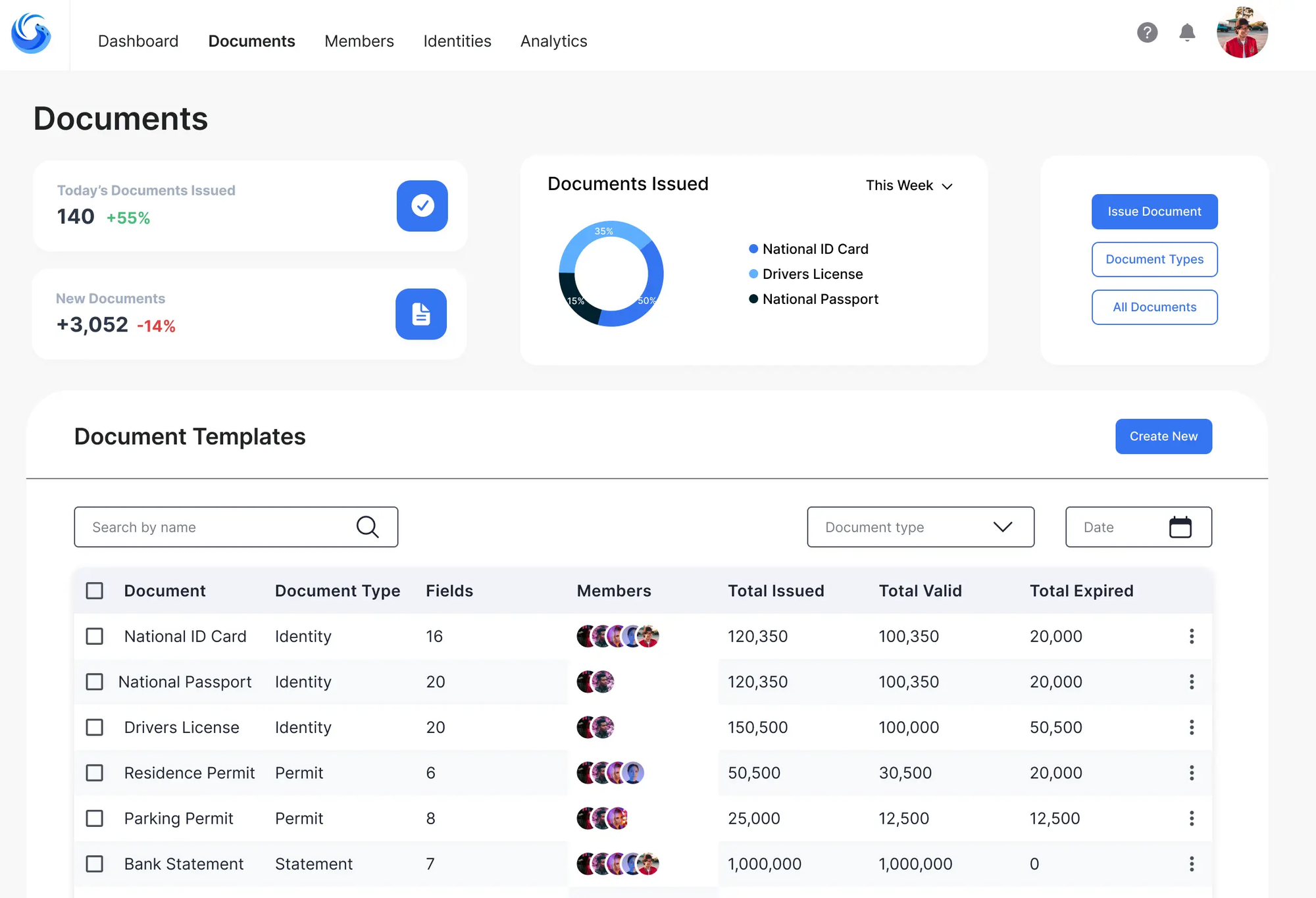
Through a user-friendly dashboard and APIs, organisations can integrate digital wallet functionality into their existing processes while LutraID handles the underlying protocols, credential formats, cryptographic verification, and interoperability requirements.
LutraID is available as a flexible SaaS or on-premises solution and can be integrated into online services as well as physical processes and devices.
Here’s a first look at what we’re building:
Core Capabilities
LutraID provides the following core capabilities:
1. Verify Identity and Digital Credentials
Companies can request and cryptographically verify PID, proof of age, driving licences, diplomas, professional qualifications, insurance information, and other credentials presented from an EUDI Wallet.
Verification can take place remotely through a website or mobile application, or in person using QR codes and compatible devices.
2. Issue Digital Credentials
Public institutions, universities, and businesses can issue trusted digital credentials directly to users’ wallets.
These can include certificates, diplomas, tickets, licences, membership credentials, insurance documents, employee credentials, and other organisation-specific attestations.
3. Authenticate Users with EUDI Wallets
LutraID enables businesses to implement wallet-based authentication, including “Login with EUDI,” as an alternative to passwords, document uploads, and fragmented identity systems.
4. Build Custom Issuance and Verification Workflows
Every organisation has different requirements. LutraID supports configurable workflows that determine which credentials or attributes are requested, how they are verified, and how the verified data is integrated into existing systems.
5. Support European Business Wallets
As the European Business Wallet framework matures, LutraID is also being developed to support organisational identities, business credentials, representation rights, mandates, electronic signatures and seals, and trusted B2B and B2G document exchange. This capability will become available toward the end of 2026 or the beginning of 2027, in line with the rollout of the EBW ecosystem.
Lutra Labs is actively participating in the WE BUILD consortium, a large-scale European pilot exploring real-world EUDI and Business Wallet use cases across banking, supply chains, and public services. This allows us to align LutraID with emerging standards and validate interoperability in cross-border scenarios.
Example: Customer Identity and Age Verification
A customer purchasing a regulated product is asked to prove that they meet the required age threshold.
Instead of uploading an identity document, the customer opens a secure link or scans a QR code and approves the request in their EUDI Wallet. The wallet shares only the necessary proof, for example that the customer is over 18.
LutraID verifies the credential and returns the result to the company immediately. The business receives the information it needs without collecting an unnecessary copy of the customer’s complete identity document.
Example: Issuing and Verifying Educational Credentials

A university issues a digital diploma directly to a graduate’s EUDI Wallet.
When applying for a job, the graduate presents the diploma to an employer. Through LutraID, the employer can verify that the credential has not been modified, confirm who issued it, and check whether it is still valid.
The process can be completed within seconds, without contacting the university or manually reviewing a PDF certificate.
Example: Digital Travel Documentation

A traveller checks in for an international flight and is asked to present travel credentials.
Instead of handing over a physical passport for manual inspection, the traveller presents a digitally issued travel document or verified identity credential from their EUDI Wallet. LutraID enables the airline to verify the authenticity of the credential, confirm the issuing authority, and validate its current status in real time.
This reduces manual checks at boarding gates and improves both security and passenger experience.
Looking Ahead
European digital identity is not a single wallet or application. It is a new infrastructure for trusted digital interactions between individuals, businesses, and public administrations.
LutraID provides businesses with a single gateway into this infrastructure: first through issuer, verifier, and authentication components for the EUDI Wallet ecosystem, and progressively through European Business Wallet capabilities for legal entities.
Our goal is to make this transition practical through familiar workflows, simple integrations, and infrastructure that businesses can adopt without becoming digital identity experts.
Explore LutraID at https://id.lutralabs.io/ or try the platform at https://lutraid.lutralabs.io/ to learn how your organisation can prepare for Europe’s digital identity ecosystem.
Want to see this running on your own flows?
Book a demo and we will walk through issuing and verifying credentials against the processes your team actually runs today.